LivecodeX
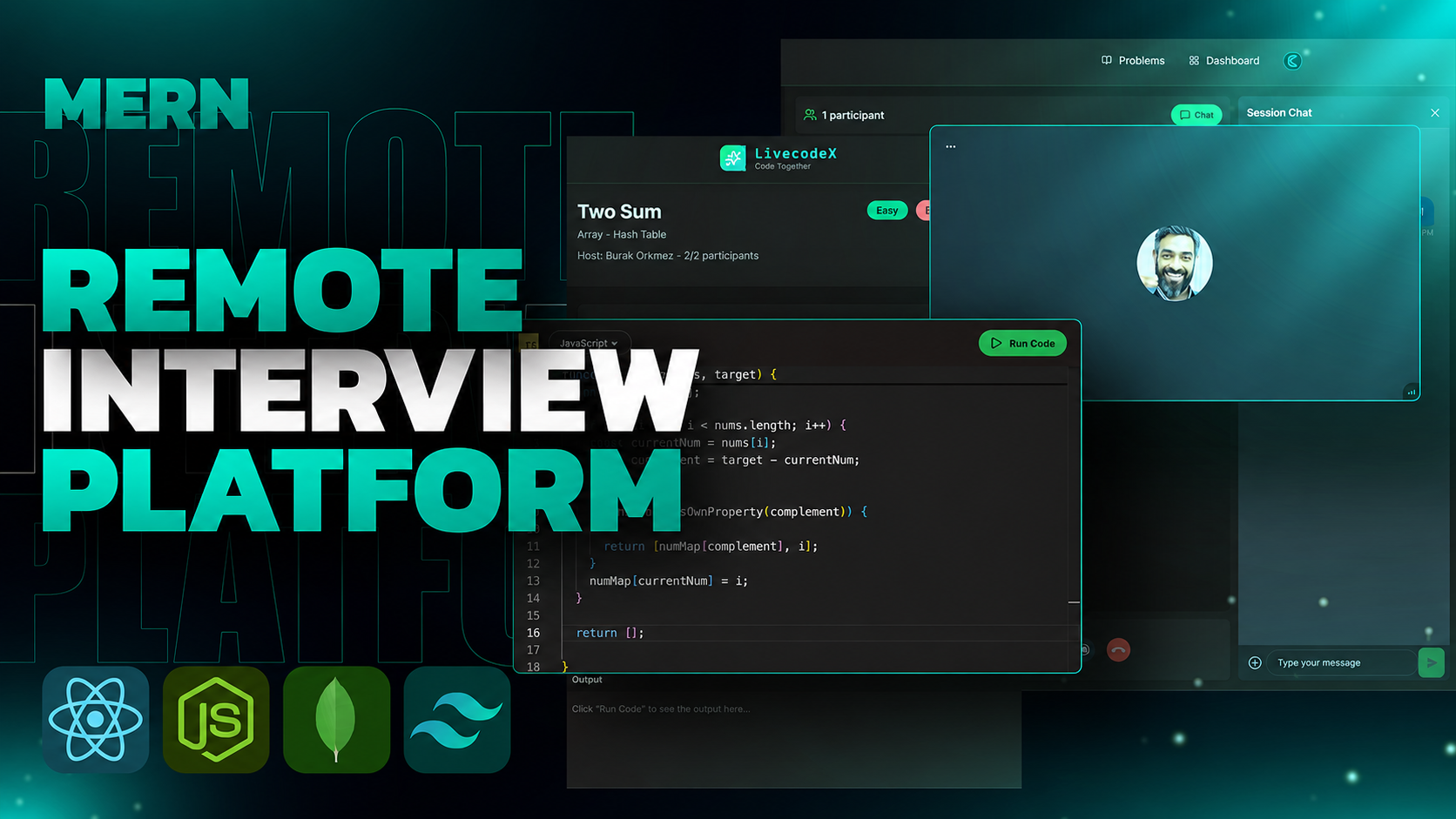
Tech Stack
Frontend & UI
State & Data Fetching
Backend & Database
Tools
Overview
LivecodeX is a modern full-stack coding interview and collaborative programming platform designed to enable developers to write, execute, and review code together in real time. The platform combines secure authentication, live code synchronization, integrated communication, and collaborative workspaces into a seamless experience for technical interviews, pair programming, coding practice, and remote collaboration.
The Problem
Technical interviews and remote coding sessions often rely on multiple disconnected tools for communication, code sharing, and collaboration. This creates delays, synchronization issues, and an inefficient interview experience. Developers also struggle to find a single platform that supports real-time collaboration, code execution, and interactive problem solving within one workspace.
The Solution
LivecodeX brings the complete collaborative coding experience into a single web application. Users can create interview rooms, collaborate on code in real time, communicate seamlessly, and work together in synchronized coding sessions. The platform focuses on responsiveness, scalability, and an intuitive user experience to simplify technical interviews and collaborative software development.
Key Features
• Secure user authentication.
• Real-time collaborative code editor.
• Multi-user coding sessions.
• Live synchronization between participants.
• Multiple programming language support.
• Interview room creation and management.
• Responsive user interface.
• Modern dashboard and workspace.
• Fast and scalable architecture.
• Smooth user experience.
Development Process
LivecodeX was developed using a modern full-stack architecture with a strong emphasis on scalability, real-time communication, and responsive design. The frontend focuses on delivering a clean and intuitive coding workspace, while the backend efficiently manages authentication, collaborative sessions, and synchronized communication. Throughout development, careful attention was given to modular architecture, maintainable code, and performance optimization to ensure a seamless collaborative experience.
Challenges
One of the biggest challenges was implementing reliable real-time collaboration while ensuring low latency and consistent synchronization across multiple users. Managing concurrent code updates, maintaining application performance, handling authentication securely, and designing an intuitive collaborative interface required careful architectural planning and optimization.
What I Learned
Developing LivecodeX significantly improved my understanding of real-time web applications, modern frontend architecture, backend API design, authentication, collaborative systems, and scalable application development. The project strengthened my problem-solving skills by requiring efficient synchronization logic, responsive UI design, and clean software architecture.
Future Improvements
Future versions of LivecodeX will include integrated video conferencing, AI-powered interview assistance, collaborative whiteboard support, automated code evaluation, interview scheduling, session recording, collaborative debugging tools, and cloud-based workspace persistence.